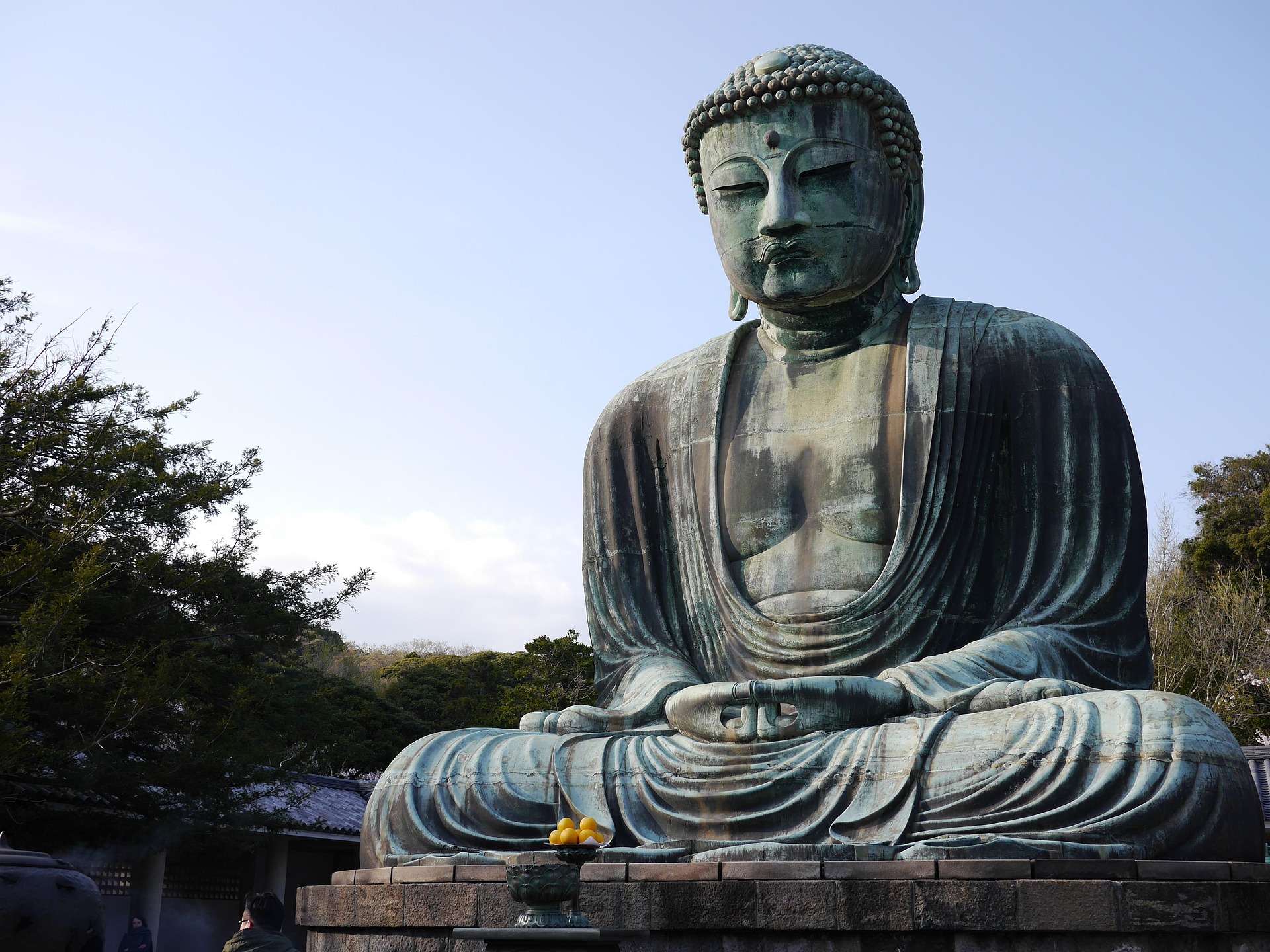
"Seeking but not finding the house-builder,
I traveled through life after life.
How painful is repeated birth !
House-builder ! You have now been seen.
You will not build the house again !"
Dhammapada, verses 153 & 154.
The Introduction provides an initial orientation to the Three Jewels, the principal paths and vehicles, and the relation between study, reflection, meditation, liberation, and awakening. It also indicates how the individual topics are connected within the wider architecture of the Buddhadharma.
On Buddha Śākyamuni : The Enlightened One
This study introduces Siddhārtha Gautama, the historical Buddha Śākyamuni, through the traditional account of his renunciation, awakening, teaching activity, and final passing. It considers both the historical figure and the exemplary meaning attributed to the Buddha as teacher, awakened one, and originator of the Buddhist community.
On the Dharma : The Universal Law
Dharma refers both to the teaching of the Buddha and to the truth disclosed by that teaching. This study examines its doctrinal, ethical, contemplative, and practical dimensions, showing how hearing, reflecting upon, and realizing the Dharma form successive moments of the Buddhist path.
On the Sangha : The Dynamic Community
The Sangha is approached in its several meanings : the original community gathered around the Buddha, the ordained communities that transmitted the teachings, the noble Sangha of realized practitioners, and the wider community of those following the path. Its continuity depends not upon institutional permanence alone but upon the living transmission, interpretation, and practice of the Dharma.
On the Buddhayāna : The Vehicle of Enlightenment
The Buddhayāna comprises the teachings and methods by which practitioners move toward liberation and awakening. This study compares the different vehicles through their respective views, paths, and fruits while treating them as differentiated orientations within the wider movement of the Buddha’s teaching.
On the Four Seals : The Philosophical Backbone
The Four Seals identify four characteristics fundamental to Buddhist thought : conditioned phenomena are impermanent ; afflicted existence is unsatisfactory ; phenomena are empty of an inherent self ; and Nirvāṇa is peace. Together they distinguish the Buddhist view from doctrines that affirm permanence, substantial identity, or final satisfaction within conditioned existence.
On the Canon : The Sacred Texts
Buddhism possesses no single canon accepted in identical form by every tradition. This study considers the formation and transmission of the principal scriptural collections, including the Pāli Canon, the Āgamas, the Mahāyāna Sūtras, and the Tibetan canonical traditions, together with the role of commentary and oral instruction.
On the Four Noble Truths : The Core Teachings
The Four Noble Truths articulate suffering, its arising, its cessation, and the path leading to cessation. They function not merely as four propositions but as a practical structure of diagnosis, understanding, realization, and cultivation through which the condition of sentient existence is examined and transformed.
On the Eightfold Path : The Way to Liberation
The Eightfold Path coordinates right view, intention, speech, action, livelihood, effort, mindfulness, and concentration. These factors are traditionally gathered under ethical discipline, meditative cultivation, and wisdom, forming an integrated path rather than a sequence of isolated exercises.
On the Two Truths : Conventional and Ultimate Reality
The doctrine of the Two Truths distinguishes the conventional validity of persons, objects, language, and causation from the ultimate emptiness of inherent existence. It does not posit two separate worlds : ultimate analysis discloses the dependent and non-substantial character of what functions conventionally.
On Saṃsāra : The Cycle of Existence
Saṃsāra is the conditioned cycle sustained by ignorance, craving, appropriation, karma, death, and rebirth. It may also be understood experientially as the repeated reproduction of suffering through habitual reactions and mistaken identification. Liberation requires insight into the conditions by which this cycle continues.
On Nirvāṇa : The Ultimate Goal
Nirvāṇa is the cessation of the causes of suffering, especially ignorance, craving, hatred, and delusion. It should not be reified as a place, object, or substantial state. This study examines how early Buddhist and later Mahāyāna traditions understand its relation to liberation, awakening, emptiness, and the end of compulsive becoming.
On the Lesser, Individual Vehicle : The Path of the Arhat
This study examines early Buddhist schools and the path centered upon personal liberation and the attainment of Arhatship. It distinguishes these historical traditions from present-day Theravāda and treats the term “Lesser Vehicle” as a later Mahāyāna classification rather than as a neutral synonym for Theravāda Buddhism.
On Merit : The Currency of Goodness
Merit is the beneficial karmic potential associated with generosity, ethical conduct, devotion, service, and other wholesome actions. Although it is sometimes represented through the metaphor of accumulation, merit is not a substantial currency. It designates conditions favorable to well-being, spiritual development, and the further cultivation of wisdom and compassion.
On Method : The Means to an End
The Buddhadharma contains many methods because dispositions, capacities, and circumstances differ among practitioners. Study, reflection, ethical discipline, meditation, ritual, devotion, visualization, and direct introduction may all function as Dharma-doors when they accord with a valid view and conduce to the intended fruit.
On Meditation : The Tool for Calmness and Insight
Buddhist meditation includes the cultivation of calm abiding and the development of insight. Stabilized attention makes possible a more exact examination of mental events and their conditions, while insight discloses impermanence, unsatisfactoriness, selflessness, dependent arising, and emptiness. Meditation remains inseparable from ethical discipline and right view.
On the Great Vehicle : Mahāyāna Buddhism
The Mahāyāna places the Bodhisattva path at the center of Buddhist practice. Its defining orientation joins the aspiration to awaken for the benefit of all beings with the cultivation of compassion, wisdom, the perfections, and insight into emptiness. Its philosophical and contemplative traditions include several distinct schools rather than a single uniform doctrine.
On the Bodhisattva : The Altruistic Path
A Bodhisattva undertakes the path to Buddhahood for the liberation of all sentient beings. The Bodhisattva ideal joins vows, disciplined practice, the cultivation of the perfections, and sustained engagement with suffering. Its altruism is inseparable from wisdom, since compassionate activity without insight may remain governed by attachment and reification.
On Compassion : The Heart of Mahāyāna Buddhism
Compassion is the resolve that sentient beings be free from suffering and its causes. In Mahāyāna practice, it is cultivated together with loving-kindness, equanimity, and wisdom. It is therefore more than emotion or pity : it is an informed and disciplined responsiveness to suffering without appropriation of the other.
On Bodhicitta : The Mind of Enlightenment
Bodhicitta is the aspiration and commitment to attain Buddhahood for the benefit of all sentient beings. Relative Bodhicitta assumes aspirational and engaged forms, while ultimate Bodhicitta refers to wisdom realizing emptiness. Their union prevents compassion from becoming blind attachment and wisdom from becoming detached quietism.
On Emptiness : The Nature of Reality
Emptiness means that persons and phenomena lack independent, inherent, or self-sufficient existence. Because they arise dependently through causes, conditions, parts, relations, and designation, they are neither substantial entities nor sheer non-existents. The realization of emptiness therefore avoids both reification and nihilism.
On The Diamond Vehicle : Vajrayāna
The Diamond Vehicle develops tantric forms of Mahāyāna practice based upon Bodhicitta and the view of emptiness. Its methods include empowerment, mantra, visualization, Deity Yoga, ritual, and subtle-body practices through which ordinary appearance is transformed into the path. These methods presuppose qualified instruction, ethical discipline, and a stable grounding in the preceding teachings.
On Rebirth : The Continuity of Consciousness
Buddhist teachings on rebirth affirm causal continuity without positing an eternal and unchanging self. This study examines how karma, consciousness, attachment, and dependent arising are used to explain continuity across death, as well as the practical significance of rebirth for ethical responsibility and liberation.
On Dzogchen : Utmost Yoga
Dzogchen, the Great Completion, centers upon recognition of the primordial purity and spontaneous presence of awareness. Through direct introduction and subsequent stabilization, thoughts and appearances are recognized without grasping and allowed to self-liberate. The view does not establish awareness as a permanent substance or hidden self but points to the nondual inseparability of emptiness and clarity.
These topics provide the principal coordinates of the site but do not exhaust its studies. Together they trace a movement from the Buddha, Dharma, and Sangha through foundational doctrine, ethical and meditative cultivation, liberation, the Bodhisattva path, Vajrayāna, and Dzogchen. The individual pages are intended as interconnected studies and should be read alongside primary texts, established commentarial traditions, and qualified practical instruction.